Best Automatic Dog Feeders in 2026
Compare three automatic dog feeders for app control, reliable offline scheduling and larger food capacity, plus the trade-offs that matter before buying.
📅 July 9, 2026
Compare Tractive DOG 6, Fi Series 3+, Fi Ultra and Garmin Alpha LTE by tracking, battery, coverage and subscriptions, plus why AirTag is different.
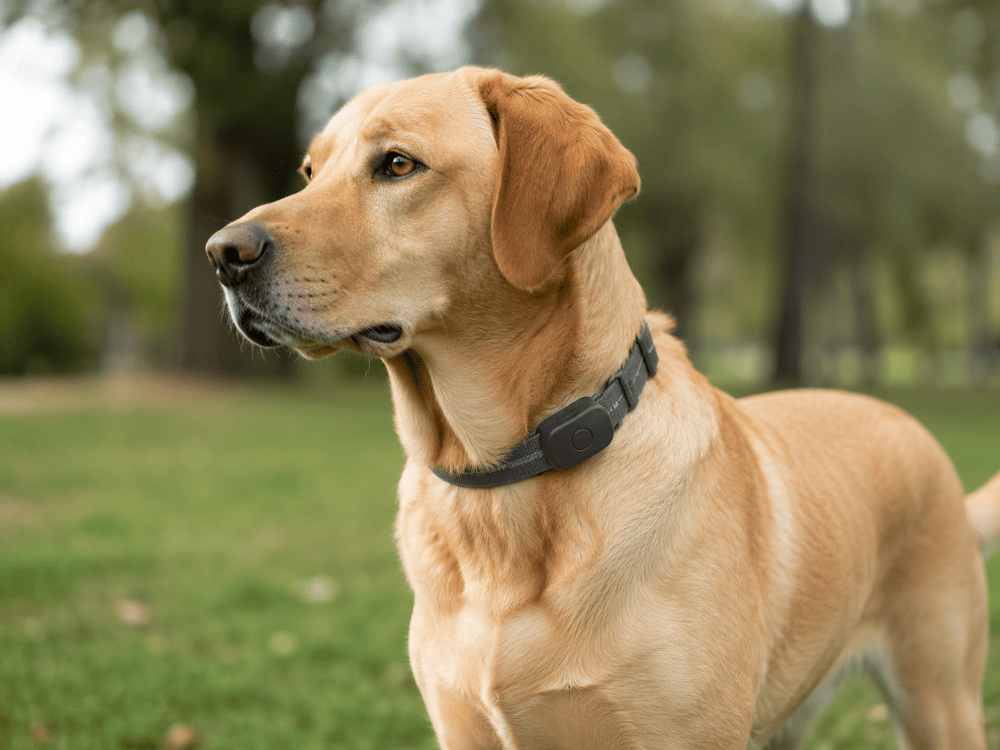
The best dog GPS tracker is the one that still helps when your dog is away from your phone, outside your home Wi-Fi and actually missing. That makes cellular or satellite connectivity, escape alerts, battery behavior, fit and subscription cost more important than a long feature list. For this 2026 guide, we focused on current products with clearly documented tracking systems.
| Tracker | Best for | Tracking / network | Battery claim | Important trade-off |
|---|---|---|---|---|
| Tractive DOG 6 | Best overall for most dogs | GPS + LTE/4G, virtual fences and live tracking | Up to 14 days with Power Saving Zones | Subscription and cellular coverage required |
| Fi Series 3+ | Long battery life | GPS + AT&T LTE-M, escape alerts and Lost Mode | Up to 3 months | Membership required for remote GPS/LTE-M features |
| Fi Ultra | Remote-area coverage in the U.S. | GPS + T-Mobile cellular + satellite coverage | About 2–3 days | Shorter battery life; U.S.-only model |
| Garmin Alpha LTE | Sporting and outdoor dogs | LTE real-time tracking in Garmin Alpha app; can integrate with compatible Garmin dog systems | Varies with use | Subscription required and ecosystem is more specialized |
Tractive’s DOG 6 is a compact cellular GPS tracker designed for dogs above 8.8 lb (4 kg). Current specifications list it at about 39 g / 1.4 oz and 71 × 29 × 17 mm. It combines GPS, GLONASS and Galileo positioning with LTE/4G connectivity, Bluetooth and Wi-Fi. Tractive lists IP68 waterproofing and up to 14 days of battery life when Power Saving Zones are used.
What makes DOG 6 a strong general recommendation is the balance: it is small enough for many dogs, offers live tracking and virtual-fence escape alerts, and works across many supported countries where its partner cellular networks are available. The subscription is not optional because the tracker uses mobile networks to send location data.
Best for: Most owners who want a dedicated, compact dog tracker with true cellular GPS and straightforward escape alerts.
Fi Series 3+ is an integrated smart collar system rather than a small clip-on tag. Fi’s July 2026 comparison lists the Series 3+ at 81.5 × 30 × 11.5 mm and 47 g, with IP68/66K waterproofing and a battery claim of up to three months. Remote location uses GPS plus AT&T LTE-M in the U.S. and an active Fi Membership is required for the full remote GPS/LTE-M experience.
Battery is the main reason to consider Fi. The collar reduces power use when it can rely on the Fi Base, Wi-Fi or a nearby phone, then switches to GPS/LTE-M when needed away from those connections. That also explains why real battery life depends heavily on how often the dog is away from home and how frequently live tracking is used.
Best for: Owners who prioritize long intervals between charging and like an integrated smart-collar design.
Fi Ultra is the newest high-coverage option in Fi’s 2026 lineup. Fi describes it as using T-Mobile cellular plus satellite coverage for dogs that spend time where standard cellular service can be limited. The current comparison lists the device at 75 × 40 × 25 mm, 68 g, IP68 and roughly two to three days of battery life.
That is an unusual trade-off: Ultra gives up the Series 3+ headline battery advantage in exchange for a broader connectivity strategy. It is also currently a United States-only model, so it is not the sensible choice for international buyers.
Best for: U.S. owners who put coverage in remote areas above long battery life.
Garmin’s Alpha LTE is aimed at the sporting-dog market. Garmin states that LTE connectivity, with a subscription plan, lets owners track a dog in real time through the Alpha app on a compatible smartphone. The device can also pair with compatible Garmin dog-tracking handheld systems, giving existing Garmin users a path to combine LTE and the company’s traditional outdoor dog-tracking ecosystem.
This is a more specialized purchase than Tractive or Fi. If you are simply monitoring an urban family dog, a consumer smart tracker may be easier. If you already use Garmin dog equipment or spend significant time hunting and working outdoors, Alpha LTE makes more sense.
Best for: Sporting-dog owners and people already invested in Garmin’s Alpha ecosystem.
Apple AirTag is useful for finding personal items, but Apple does not describe it as a live GPS pet tracker. AirTag broadcasts a secure Bluetooth signal that nearby Apple devices in the Find My network can detect and relay. That can be helpful in populated areas, but location updates depend on the presence of participating devices rather than the AirTag maintaining its own cellular GPS connection.
For a dog that may run into rural terrain, AirTag should be treated as a secondary finder rather than a replacement for a dedicated GPS/cellular tracker. It can still be attractive because there is no cellular subscription and the Find My network is enormous, but the technology solves a different problem.
A tracker that works perfectly in one city can struggle in rural or indoor conditions. Check the provider’s coverage information and test Lost Mode or live tracking before relying on the device in an emergency.
Headline battery figures usually assume favorable conditions. Frequent GPS updates, poor signal and time away from home power-saving connections can shorten runtime significantly. Charge before travel rather than waiting for a low-battery alert.
Small dogs feel every extra gram. Tractive DOG 6 is about 39 g, Fi Series 3+ 47 g and Fi Ultra 68 g. The tracker should sit securely without swinging, rubbing or becoming a snag point.
True cellular trackers need network service. Compare the hardware price together with the required plan rather than treating the device price as the total cost.
Fast awareness matters. Virtual fences, Lost Mode and live map updates are useful only if you know how to activate them before your dog disappears. Test the emergency workflow while your dog is safely controlled.
| Dedicated GPS/cellular tracker | AirTag / Bluetooth network finder | |
|---|---|---|
| Long-distance location | Uses its own network connection where coverage exists | Depends on nearby Find My devices relaying the tag |
| Live tracking | Available on supported models/plans | Not equivalent to continuous cellular GPS |
| Subscription | Usually required | No cellular subscription |
| Best use | Primary escape/recovery tracker | Secondary low-cost finder, especially in populated areas |
Tractive DOG 6 is the most balanced choice in this shortlist because it combines a relatively light device, live GPS, virtual fences, IP68 waterproofing and broad supported coverage. Fi Series 3+ is stronger if battery life is your first priority.
Fi currently claims up to three months for Series 3+ under favorable use. Treat that as a maximum rather than a guarantee because GPS/LTE-M usage and Lost Mode shorten battery life.
Most consumer GPS trackers still need a cellular or other communication network to send the location to your phone. Fi Ultra adds satellite coverage to its U.S. connectivity approach, while Garmin has separate outdoor tracking ecosystems. Always verify the exact device and service.
You can attach an AirTag as a secondary finder, but it is not the same as a dedicated live GPS/cellular dog tracker. Its remote location depends on Apple’s Find My device network.
Choose Tractive DOG 6 for the strongest all-around balance of size, live tracking and straightforward escape alerts. Choose Fi Series 3+ when long battery life matters most. Choose Fi Ultra if you are in the U.S. and remote-area connectivity is the priority, accepting much shorter battery life. Choose Garmin Alpha LTE when your dog is part of a sporting/outdoor Garmin workflow.
No tracker replaces a secure fence, recall training, microchip and visible identification. The technology is a recovery layer—not the whole safety system.
Compare three automatic dog feeders for app control, reliable offline scheduling and larger food capacity, plus the trade-offs that matter before buying.
Compare supportive dog beds for large and giant breeds, including orthopedic foam, washable covers, access height and sizing trade-offs.
Compare dog car seat covers for waterproof protection, hammock use, seatbelt access and fit, with three current research-backed picks.