Best Cat Litter Boxes for Small Apartments in 2026
Compare space-conscious cat litter boxes for small apartments, including compact top-entry, covered front-entry and automated options with footprint trade-offs.
📅 July 9, 2026
Compare the best cat toys for indoor cats, including wand, puzzle and self-play options. Research-based picks plus enrichment and safety advice.
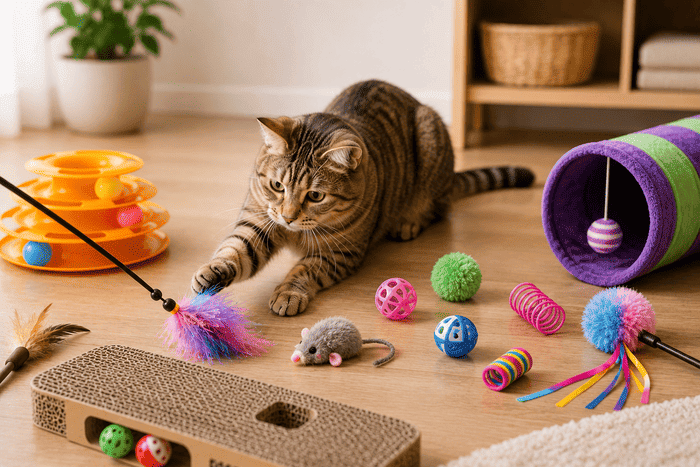
Indoor cats benefit from play that lets them stalk, chase, pounce, search and manipulate. The strongest toy collection mixes interactive sessions with safe independent enrichment instead of relying on one electronic gadget. We compared current favorites by play pattern, replay value, supervision needs and how easily the difficulty can be adjusted.
| Product | Best for | Why it stands out |
|---|---|---|
| Cat Dancer Original | interactive chase play | The simple flexible wire-and-cardboard design creates irregular prey-like movement without complicated electronics. |
| Nina Ottosson Buggin' Out Puzzle & Play | food puzzle enrichment | Sliding and rotating compartments turn treats or kibble into a search-and-manipulation task. |
| Catit Play Massager Circuit | self-directed activity | A multi-texture activity format encourages batting, rubbing and investigation during independent play. |
| Potaroma Hide-and-Seek Interactive Toy | motion-based self-play | Moving elements and hiding behavior can create repeated chase opportunities for cats that enjoy mechanical toys. |
The simple flexible wire-and-cardboard design creates irregular prey-like movement without complicated electronics.
What to keep in mind: It is an interactive toy and should be stored when play is over rather than left as an unsupervised chew item.
Sliding and rotating compartments turn treats or kibble into a search-and-manipulation task.
What to keep in mind: Some cats need the puzzle demonstrated at an easier setting before they understand the game.
A multi-texture activity format encourages batting, rubbing and investigation during independent play.
What to keep in mind: Not every cat is motivated by stationary activity centers, so observe the cat's preferred style first.
Moving elements and hiding behavior can create repeated chase opportunities for cats that enjoy mechanical toys.
What to keep in mind: Battery-powered toys should be inspected for damage and turned off if the cat becomes overstimulated or begins chewing components.
Good play often moves through stalk, chase, pounce and capture. Let the cat 'win' regularly instead of creating endless frustration.
Put some toys away and rotate them back later. Novelty can renew interest without constantly buying new items.
Strings, ribbons, feathers and small pieces are best used during active human-supervised play.
Start easy, then increase difficulty. A puzzle that is impossible on day one is more likely to be abandoned.
Some cats love wand toys and ignore electronics; others prefer balls, tunnels or puzzles. Let behavior guide the collection.
Cats may prefer chasing, pouncing, batting, climbing or food puzzles. Rotating several play types usually provides more value than buying many similar toys.
Strings, feathers and small detachable pieces may require supervised play. Put them away when the session ends if the product is not designed for unattended use.
Puzzle toys should be challenging without being frustrating. Start easy and increase difficulty once the cat understands the task.
Predictable motion can become boring. Human-led wand play or toys with changing patterns can better imitate the stop-start nature of prey.
A small rotation keeps familiar toys novel. Leaving every toy out permanently can reduce interest.
Modern Pet Picks treats this as a research-based comparison, not a hands-on laboratory test. We look for products that are currently represented by their manufacturers or established product ecosystems, then compare the decision points that matter for the category: fit, safety, maintenance, compatibility, recurring costs and practical limitations. Where a feature depends on an app, subscription, battery, replacement filter, hub or cellular service, that dependency is part of the comparison rather than a footnote.
Product names and specifications can change after publication. Before buying, verify the exact model, current compatibility and care instructions on the manufacturer’s current documentation. For health or behavior concerns, product information is not a substitute for advice from a veterinarian or an appropriately qualified behavior professional.
This guide is designed for pet owners who want a short list to research further rather than a single “winner” presented as perfect for every household. The strongest choice depends on your pet’s size, habits, environment and tolerance for maintenance. We therefore emphasize trade-offs and who should consider or skip a product, not just feature counts.
Several short, focused sessions can work better than one very long session. Adjust duration to the cat's age, fitness and interest.
A laser can trigger chase behavior, but it offers nothing physical to catch. If you use one, finish with a toy or treat the cat can actually capture.
Strings and attachments can be hazardous when unsupervised, so interactive wand toys are better stored after the session.
Cat Dancer is a great reminder that simple interactive play can beat expensive gadgets. Add a food puzzle for problem-solving and one safe independent toy for variety, then rotate based on what your own cat repeatedly chooses.
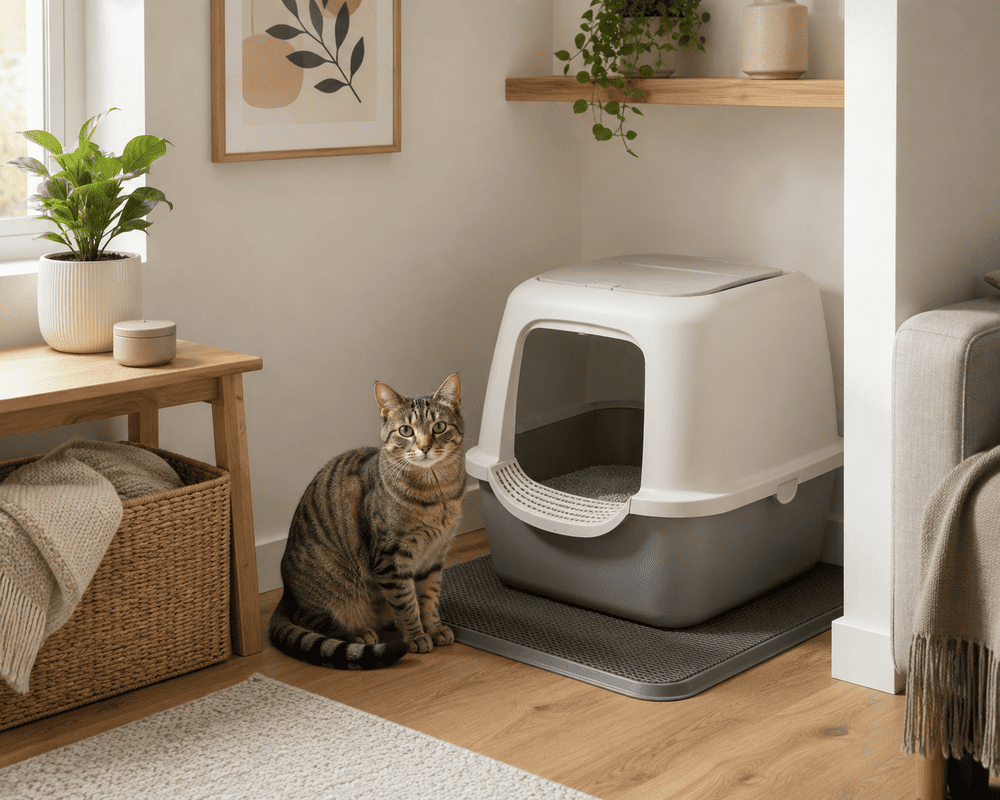
Compare space-conscious cat litter boxes for small apartments, including compact top-entry, covered front-entry and automated options with footprint trade-offs.
Compare the best cat beds for curling, warmth, hiding and everyday naps. Research-based picks plus tips on size, placement, materials and cleaning.
Compare the best cat trees for climbing, scratching, lounging, large cats and small spaces. Research-based picks plus stability and placement advice.