Best Cat Litter Boxes for Small Apartments in 2026
Compare space-conscious cat litter boxes for small apartments, including compact top-entry, covered front-entry and automated options with footprint trade-offs.
📅 July 9, 2026
Compare cat carriers for vet visits, road trips and airline-style travel. Research-based picks for entry access, structure, ventilation and comfort.
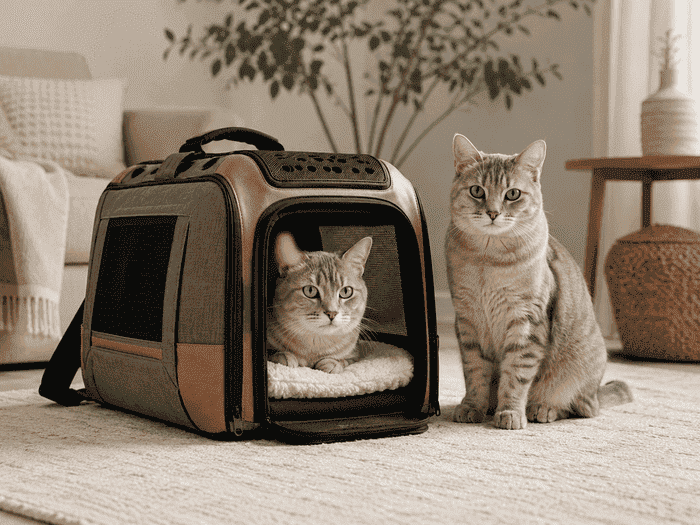
A carrier is safety equipment first and luggage second. The best choice keeps its shape, closes securely, ventilates well and lets you get the cat in and out without turning every vet visit into a wrestling match. We compared current hard and soft carriers by structure, entry points, cleanability and travel use.
| Product | Best for | Why it stands out |
|---|---|---|
| Petseek Extra Large Cat Carrier | roomy ground travel | A large structured soft carrier gives bigger cats or bonded travel pairs more interior space and folds down for storage. |
| Sherpa Original Deluxe Carrier | soft-sided everyday travel | The familiar soft-sided format is lightweight and practical for vet trips and travel where a compressible carrier is useful. |
| Petmate Two-Door Top Load Kennel | easy loading and vet access | Front and top doors make it easier to place or remove a reluctant cat without pushing through one narrow opening. |
| Travel Cat Transpurrter | anxious travelers | Multiple carry modes, privacy panels and structured access are designed around cats that benefit from a more enclosed-feeling travel space. |
A large structured soft carrier gives bigger cats or bonded travel pairs more interior space and folds down for storage.
What to keep in mind: Its generous footprint may be unnecessary for small cats and can exceed airline cabin dimensions.
The familiar soft-sided format is lightweight and practical for vet trips and travel where a compressible carrier is useful.
What to keep in mind: Airline rules vary by route and aircraft, so a carrier marketed for travel is not automatic approval.
Front and top doors make it easier to place or remove a reluctant cat without pushing through one narrow opening.
What to keep in mind: Hard carriers are bulkier to store and carry than soft bags.
Multiple carry modes, privacy panels and structured access are designed around cats that benefit from a more enclosed-feeling travel space.
What to keep in mind: The premium feature set costs more and still needs to match the cat's size and actual travel requirements.
A top opening can make loading easier and can let veterinary staff examine some cats while they remain in the lower half of a familiar carrier.
The carrier should not collapse onto the cat, and doors or zippers should stay securely closed during movement.
Mesh or vents should provide airflow without creating weak points a frightened cat can tear through.
The cat needs room to stand, turn and settle, but an excessively large carrier can be awkward and unstable during transport.
For airline use, verify the exact carrier dimensions and pet policy with the airline for the specific trip before departure.
Top and front openings can reduce stress during loading and veterinary exams. Some carriers also allow the top half to detach.
Soft carriers are lighter, while hard carriers resist crushing and are easier to wipe. Choose based on the trip rather than assuming one style is best everywhere.
Mesh or vents should provide airflow without making the carrier flimsy. Some cats prefer a partial cover to reduce visual stimulation.
A carrier should sit stably in the vehicle and be secured according to the manufacturer’s directions. Do not let a cat roam freely in a moving car.
Airline rules vary by carrier, route and aircraft. Always confirm current dimensions and pet policies directly with the airline before travel.
Modern Pet Picks treats this as a research-based comparison, not a hands-on laboratory test. We look for products that are currently represented by their manufacturers or established product ecosystems, then compare the decision points that matter for the category: fit, safety, maintenance, compatibility, recurring costs and practical limitations. Where a feature depends on an app, subscription, battery, replacement filter, hub or cellular service, that dependency is part of the comparison rather than a footnote.
Product names and specifications can change after publication. Before buying, verify the exact model, current compatibility and care instructions on the manufacturer’s current documentation. For health or behavior concerns, product information is not a substitute for advice from a veterinarian or an appropriately qualified behavior professional.
This guide is designed for pet owners who want a short list to research further rather than a single “winner” presented as perfect for every household. The strongest choice depends on your pet’s size, habits, environment and tolerance for maintenance. We therefore emphasize trade-offs and who should consider or skip a product, not just feature counts.
Both can work when well constructed and correctly used. Hard carriers are rigid and easy to clean; soft carriers are lighter and easier to store.
Leave it accessible at home with familiar bedding and treats so it becomes normal furniture instead of appearing only before stressful trips.
Only if the carrier is designed for their combined size and the cats are calm together. Separate carriers are often easier and safer for transport.
Petmate's top-load design is especially practical for routine vet access, Sherpa is a versatile soft carrier, Petseek serves larger-space needs, and Transpurrter focuses on anxious-cat comfort. Buy for the trip you actually take most often.
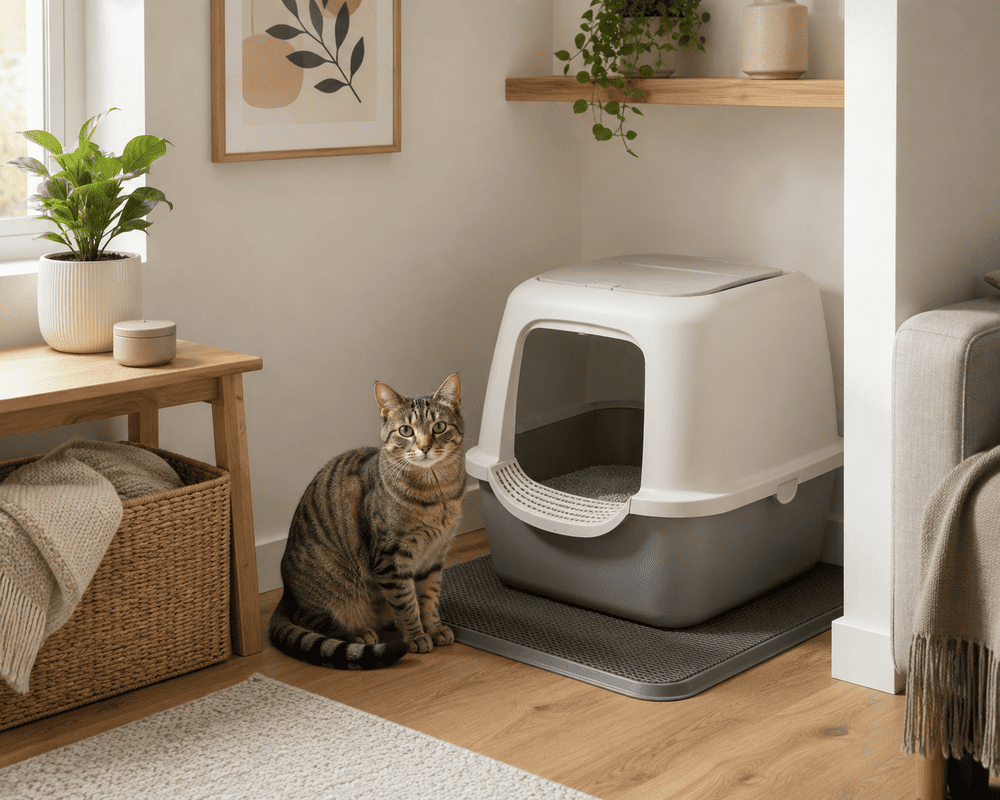
Compare space-conscious cat litter boxes for small apartments, including compact top-entry, covered front-entry and automated options with footprint trade-offs.
Compare the best cat beds for curling, warmth, hiding and everyday naps. Research-based picks plus tips on size, placement, materials and cleaning.
Compare the best cat trees for climbing, scratching, lounging, large cats and small spaces. Research-based picks plus stability and placement advice.