Best Cat Litter Boxes for Small Apartments in 2026
Compare space-conscious cat litter boxes for small apartments, including compact top-entry, covered front-entry and automated options with footprint trade-offs.
📅 July 9, 2026
Compare automatic cat feeders for dry food, wet food, scheduled meals and selective access. Research-based picks plus portion and cleaning advice.
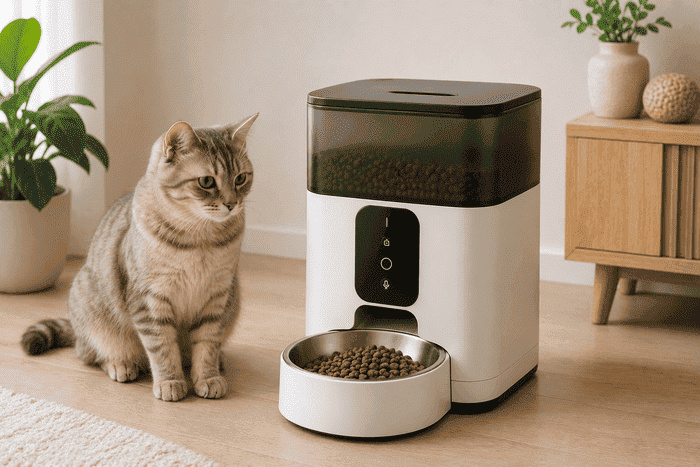
Cat feeders solve several different problems: timed dry-food meals, chilled wet food, portion consistency and preventing one pet from stealing another pet's food. We compared current options by the job they perform rather than pretending one design is best for every household.
| Product | Best for | Why it stands out |
|---|---|---|
| PETLIBRO Granary Camera Feeder | scheduled dry food plus monitoring | A dry-food hopper with camera features suits owners who want meal schedules and remote visual check-ins in one device. |
| PETLIBRO Polar Wet Food Feeder | scheduled wet food | A refrigerated/chilled feeder format is designed around keeping wet meals available on a timed schedule rather than forcing wet food into a dry hopper. |
| PetSafe Smart Feed | connected dry-food schedules | A well-established app-controlled feeder is useful for repeatable dry-food routines and remote meal control. |
| SureFeed Microchip Pet Feeder | food access in multi-pet homes | Microchip or collar-tag recognition helps restrict a bowl to the intended cat, which can reduce food stealing between pets. |
A dry-food hopper with camera features suits owners who want meal schedules and remote visual check-ins in one device.
What to keep in mind: The camera adds cost and connectivity requirements that are unnecessary if simple scheduling is all you need.
A refrigerated/chilled feeder format is designed around keeping wet meals available on a timed schedule rather than forcing wet food into a dry hopper.
What to keep in mind: Wet-food systems need more frequent washing and careful food-safety handling.
A well-established app-controlled feeder is useful for repeatable dry-food routines and remote meal control.
What to keep in mind: As with all smart feeders, test offline behavior and portion size with your own kibble.
Microchip or collar-tag recognition helps restrict a bowl to the intended cat, which can reduce food stealing between pets.
What to keep in mind: It controls access rather than acting like a high-capacity timed hopper, so it solves a different problem.
Decide whether you need timing, refrigeration, selective access or remote monitoring before comparing brands.
Dry hoppers are built around kibble dimensions. Wet food needs a feeder specifically designed to keep it appropriately stored for the intended period.
Run multiple test portions and weigh or measure them. Kibble density and shape can change how much a mechanical feeder dispenses.
Make sure the bowl shape is comfortable for the cat and easy to remove for cleaning.
A feeder does not replace daily observation. Keep a clear plan for power, network or mechanical failure.
Dry kibble, semi-moist food and wet food require different mechanisms. A feeder designed for kibble should not be used for wet food unless the manufacturer specifically supports it.
Compare how the feeder defines a portion and the minimum amount it can dispense. Small cats may need finer control than a large-capacity feeder provides.
Power backup, anti-jam design and a secure lid matter when the feeder is expected to work while nobody is home.
A timed feeder does not stop one cat from eating another cat’s meal. Microchip-controlled access can solve a different problem than scheduling.
Food-contact parts should be easy to remove and wash. Wet-food feeders need especially careful hygiene and temperature management.
Modern Pet Picks treats this as a research-based comparison, not a hands-on laboratory test. We look for products that are currently represented by their manufacturers or established product ecosystems, then compare the decision points that matter for the category: fit, safety, maintenance, compatibility, recurring costs and practical limitations. Where a feature depends on an app, subscription, battery, replacement filter, hub or cellular service, that dependency is part of the comparison rather than a footnote.
Product names and specifications can change after publication. Before buying, verify the exact model, current compatibility and care instructions on the manufacturer’s current documentation. For health or behavior concerns, product information is not a substitute for advice from a veterinarian or an appropriately qualified behavior professional.
This guide is designed for pet owners who want a short list to research further rather than a single “winner” presented as perfect for every household. The strongest choice depends on your pet’s size, habits, environment and tolerance for maintenance. We therefore emphasize trade-offs and who should consider or skip a product, not just feature counts.
A consistent timed feeder can separate meal delivery from the owner's wake-up routine for some cats, though behavior change takes time.
Only if the exact model is designed for it. Standard dry-food hoppers are not appropriate for perishable wet food.
It controls which pet can access the bowl, which is useful when cats eat different diets or one pet steals food.
For dry-food scheduling, PETLIBRO and PetSafe are strong places to compare. Choose Polar when timed wet meals are the real requirement, and SureFeed when selective access—not timing—is the problem to solve.
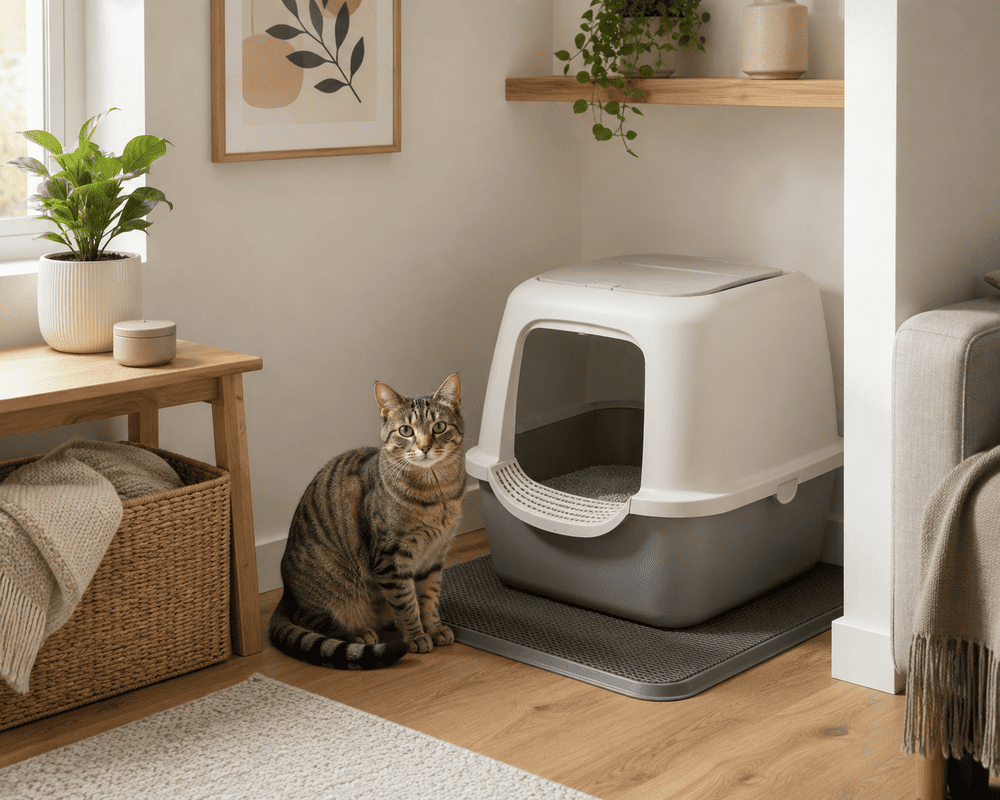
Compare space-conscious cat litter boxes for small apartments, including compact top-entry, covered front-entry and automated options with footprint trade-offs.
Compare the best cat beds for curling, warmth, hiding and everyday naps. Research-based picks plus tips on size, placement, materials and cleaning.
Compare the best cat trees for climbing, scratching, lounging, large cats and small spaces. Research-based picks plus stability and placement advice.