Best Pet Cameras for Home in 2026
Compare the best pet cameras for home monitoring, 360-degree views, two-way audio and treat dispensing. Research-based 2026 picks and privacy tips.
📅 August 9, 2026
Compare smart pet doors using microchip, RFID and app controls. Research-based picks for cats, small dogs, larger dogs, curfews and access security.
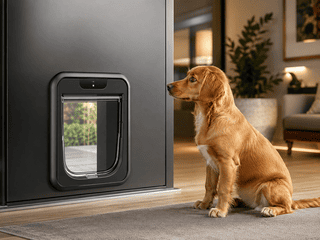
Smart pet doors solve a specific problem: letting the right animal pass while limiting unwanted access. The main differences are identity method, opening size, app control, lock strength, installation requirements and whether the pet must wear a tag. We compared current systems across those decisions.
| Product | Best for | Why it stands out |
|---|---|---|
| SureFlap Microchip Pet Door Connect | microchipped cats and small dogs | It can identify compatible implanted microchips and, with the connected hub ecosystem, add schedules, activity information and remote controls. |
| PetSafe SmartDoor Connected | app-controlled dog access | A connected pet-door design targets owners who want schedules and smartphone control in a more dog-oriented size range. |
| Pawport Smart Pet Door | premium motorized access | A motorized, tag-aware approach emphasizes automated opening and stronger physical control than a basic hinged microchip flap. |
| Cat Mate Elite Microchip Cat Flap | cat access without a large smart-home stack | Microchip recognition and built-in entry controls suit cat owners who want selective access with less emphasis on a phone-first experience. |
It can identify compatible implanted microchips and, with the connected hub ecosystem, add schedules, activity information and remote controls.
What to keep in mind: Opening size limits suitability for larger dogs, and connected features require additional hub setup.
A connected pet-door design targets owners who want schedules and smartphone control in a more dog-oriented size range.
What to keep in mind: Installation is more involved than a simple flap and depends on matching the door or wall location correctly.
A motorized, tag-aware approach emphasizes automated opening and stronger physical control than a basic hinged microchip flap.
What to keep in mind: Premium hardware is more expensive and adds more electronic and mechanical components to maintain.
Microchip recognition and built-in entry controls suit cat owners who want selective access with less emphasis on a phone-first experience.
What to keep in mind: Its cat-sized opening is not intended for medium or large dogs.
Measure the pet's width and height and compare with the actual flap opening. Weight labels alone do not guarantee comfortable passage.
Implanted-microchip readers avoid a collar tag; RFID or Bluetooth systems may support different ranges or larger-door designs but require the pet to wear hardware.
Doors, walls and glass need different installation kits and skills. Confirm the intended surface before buying.
Selective unlocking helps, but lock design and physical construction still determine how resistant a door is to determined animals.
Understand what happens during power loss, network loss and low battery. A smart door should fail in a way that fits your home's safety needs.
Microchip recognition, collar keys and app control solve different problems. Choose the method your pet can use consistently without depending on a loose tag if that matters to you.
Measure the pet at the shoulders and body width, then compare the actual flap opening. Product names such as “large” are not standardized.
Doors, walls and glass can require different kits and professional work. Confirm tunnel depth, framing and weather sealing before cutting an opening.
Curfews and remote locking are useful only when every household member understands the rules and the pet has an indoor alternative.
Consider what happens during a power, battery, Wi-Fi or hub outage. The physical lock and manual controls matter as much as the app.
Modern Pet Picks treats this as a research-based comparison, not a hands-on laboratory test. We look for products that are currently represented by their manufacturers or established product ecosystems, then compare the decision points that matter for the category: fit, safety, maintenance, compatibility, recurring costs and practical limitations. Where a feature depends on an app, subscription, battery, replacement filter, hub or cellular service, that dependency is part of the comparison rather than a footnote.
Product names and specifications can change after publication. Before buying, verify the exact model, current compatibility and care instructions on the manufacturer’s current documentation. For health or behavior concerns, product information is not a substitute for advice from a veterinarian or an appropriately qualified behavior professional.
This guide is designed for pet owners who want a short list to research further rather than a single “winner” presented as perfect for every household. The strongest choice depends on your pet’s size, habits, environment and tolerance for maintenance. We therefore emphasize trade-offs and who should consider or skip a product, not just feature counts.
Some SureFlap and Cat Mate models can read compatible implanted microchips. Other smart doors use a collar tag instead.
Some connected features do, while basic microchip recognition can work locally on certain models. Check the exact model.
No system should be treated as absolute wildlife security. Selective access helps, but installation and physical lock design still matter.
SureFlap is the clearest fit for microchipped cats and smaller pets, PetSafe is worth comparing for connected dog access, and Pawport serves the premium motorized niche. Buy based on pet size and installation surface before comparing app screens.
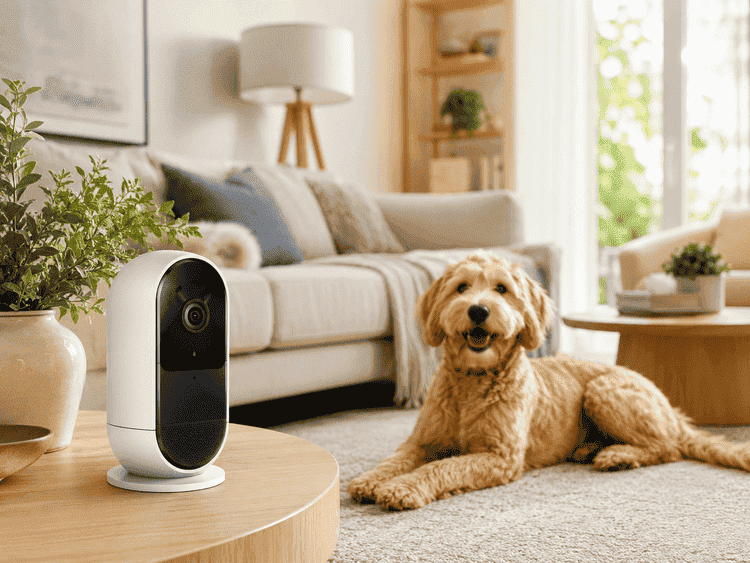
Compare the best pet cameras for home monitoring, 360-degree views, two-way audio and treat dispensing. Research-based 2026 picks and privacy tips.
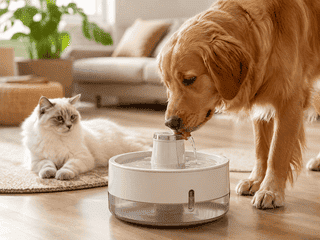
Compare smart pet water fountains with app tracking, cordless operation, filtration and easy-clean designs. Research-based 2026 picks for cats and small pets.
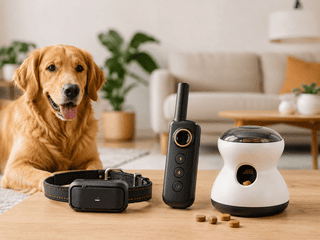
Compare smart and practical dog training tools built around rewards, timing and feedback. Research-based picks without shock-based recommendations.