Best Cat Litter Boxes for Small Apartments in 2026
Compare space-conscious cat litter boxes for small apartments, including compact top-entry, covered front-entry and automated options with footprint trade-offs.
📅 July 9, 2026
Compare the best cat grooming tools for shedding, detangling and sensitive cats. Research-based picks plus coat-type, comfort and cleaning advice.
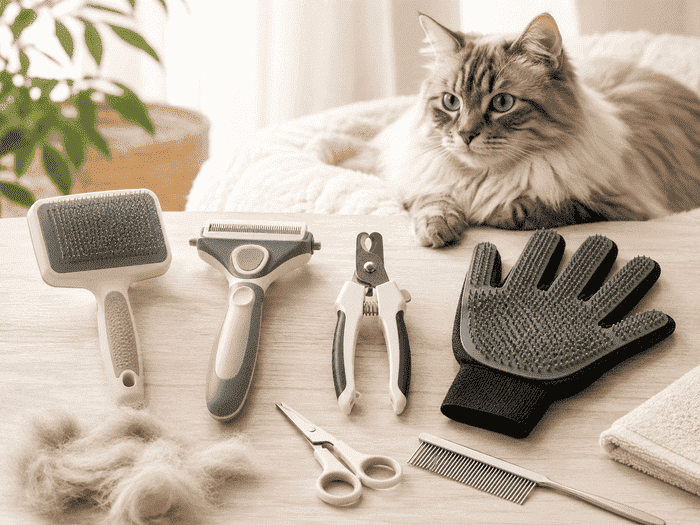
Cats groom themselves, but brushing can still remove loose coat, help owners spot tangles and make long-haired coat maintenance easier. The right tool depends on coat length, undercoat density and the cat's tolerance for handling. We compared current brush styles with special attention to gentleness and control.
| Product | Best for | Why it stands out |
|---|---|---|
| Mars Coat King Boar Bristle Cat Brush | gentle everyday brushing | Soft natural bristles suit routine coat finishing and cats that dislike sharp-feeling grooming tools. |
| Hertzko Self-Cleaning Slicker Brush | detangling and deeper brushing | Fine slicker pins can reach through more coat than a surface bristle brush, while the retracting mechanism simplifies hair removal from the tool. |
| FURminator Hair Collection Brush | loose surface hair | Rubber-style bristles attract loose hair and dander while feeling gentler than metal teeth for many cats. |
| HandsOn Grooming Gloves | brush-sensitive cats | Grooming gloves make the motion closer to normal petting and can help cats that resist a conventional handled brush. |
Soft natural bristles suit routine coat finishing and cats that dislike sharp-feeling grooming tools.
What to keep in mind: A soft bristle brush will not solve dense mats or heavy undercoat by itself.
Fine slicker pins can reach through more coat than a surface bristle brush, while the retracting mechanism simplifies hair removal from the tool.
What to keep in mind: Use light pressure and avoid repeatedly scraping the same skin area.
Rubber-style bristles attract loose hair and dander while feeling gentler than metal teeth for many cats.
What to keep in mind: It is designed more for loose hair collection than for serious tangles.
Grooming gloves make the motion closer to normal petting and can help cats that resist a conventional handled brush.
What to keep in mind: They may be less precise on long coats, tight knots or small areas.
Long-haired cats usually need a comb or slicker that can reach through the coat, while short-haired cats may do well with softer surface tools.
Start with very short sessions and pair handling with something positive. Stop before the cat escalates to fear or defensive behavior.
Tight mats can pull painfully on skin. Do not tug aggressively or put scissors against a mat where folded skin may be hidden.
Remove hair after sessions and clean the brush according to its materials so oils and debris do not build up.
Coat tools do not replace nail care, dental care or veterinary attention for skin and ear problems.
Short coats usually need different tooth spacing and brush depth than long or dense coats. Match the tool to the coat instead of using maximum pressure.
Regular gentle combing is safer than waiting for tight mats. Severe mats close to the skin may need professional help rather than home cutting.
Cats have thin, mobile skin. Check for redness, sores or parasites before brushing and stop if the tool causes discomfort.
A compact brush or glove can be easier for cats that dislike formal grooming. Pair short sessions with rewards and end before the cat becomes agitated.
Loose hair and skin oils build up in grooming tools. Clean them according to the manufacturer’s instructions and replace damaged teeth or pins.
Modern Pet Picks treats this as a research-based comparison, not a hands-on laboratory test. We look for products that are currently represented by their manufacturers or established product ecosystems, then compare the decision points that matter for the category: fit, safety, maintenance, compatibility, recurring costs and practical limitations. Where a feature depends on an app, subscription, battery, replacement filter, hub or cellular service, that dependency is part of the comparison rather than a footnote.
Product names and specifications can change after publication. Before buying, verify the exact model, current compatibility and care instructions on the manufacturer’s current documentation. For health or behavior concerns, product information is not a substitute for advice from a veterinarian or an appropriately qualified behavior professional.
This guide is designed for pet owners who want a short list to research further rather than a single “winner” presented as perfect for every household. The strongest choice depends on your pet’s size, habits, environment and tolerance for maintenance. We therefore emphasize trade-offs and who should consider or skip a product, not just feature counts.
It depends on coat and shedding. Long or mat-prone coats generally need more frequent brushing than short coats.
A soft rubber tool or grooming glove can feel less threatening, but gradual handling training matters more than the brand.
Close clipping can injure thin cat skin. Tight or extensive matting is safer to address with a professional groomer or veterinary team.
Start gentle. A boar-bristle brush or grooming glove works for many sensitive cats, while Hertzko or another appropriate slicker is more useful when deeper coat work is needed. The best grooming tool is one the cat can tolerate without a battle.

Compare space-conscious cat litter boxes for small apartments, including compact top-entry, covered front-entry and automated options with footprint trade-offs.
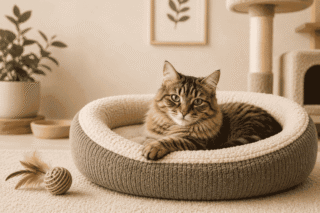
Compare the best cat beds for curling, warmth, hiding and everyday naps. Research-based picks plus tips on size, placement, materials and cleaning.
Compare the best cat trees for climbing, scratching, lounging, large cats and small spaces. Research-based picks plus stability and placement advice.